
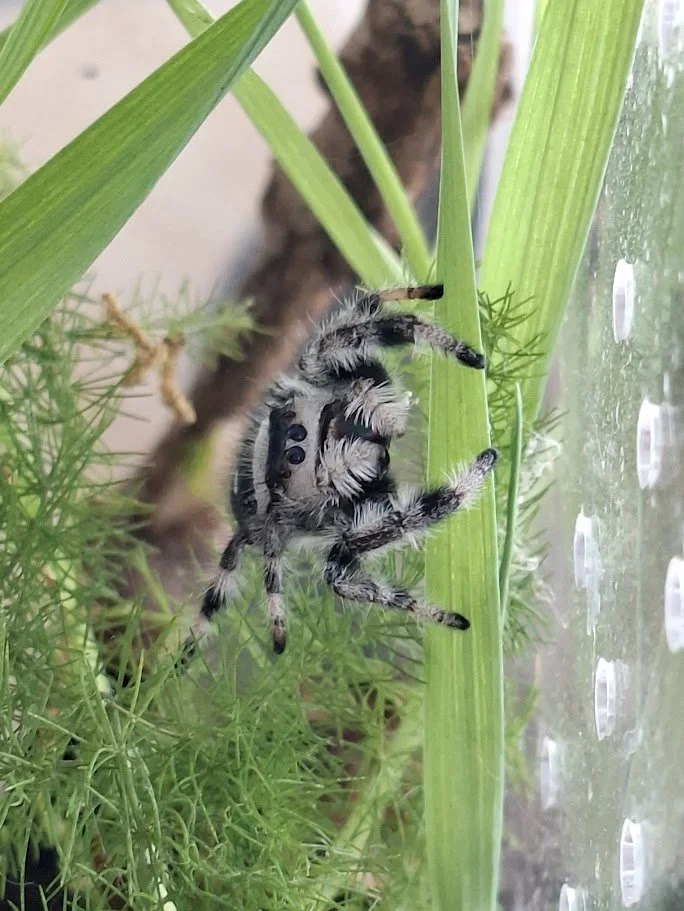
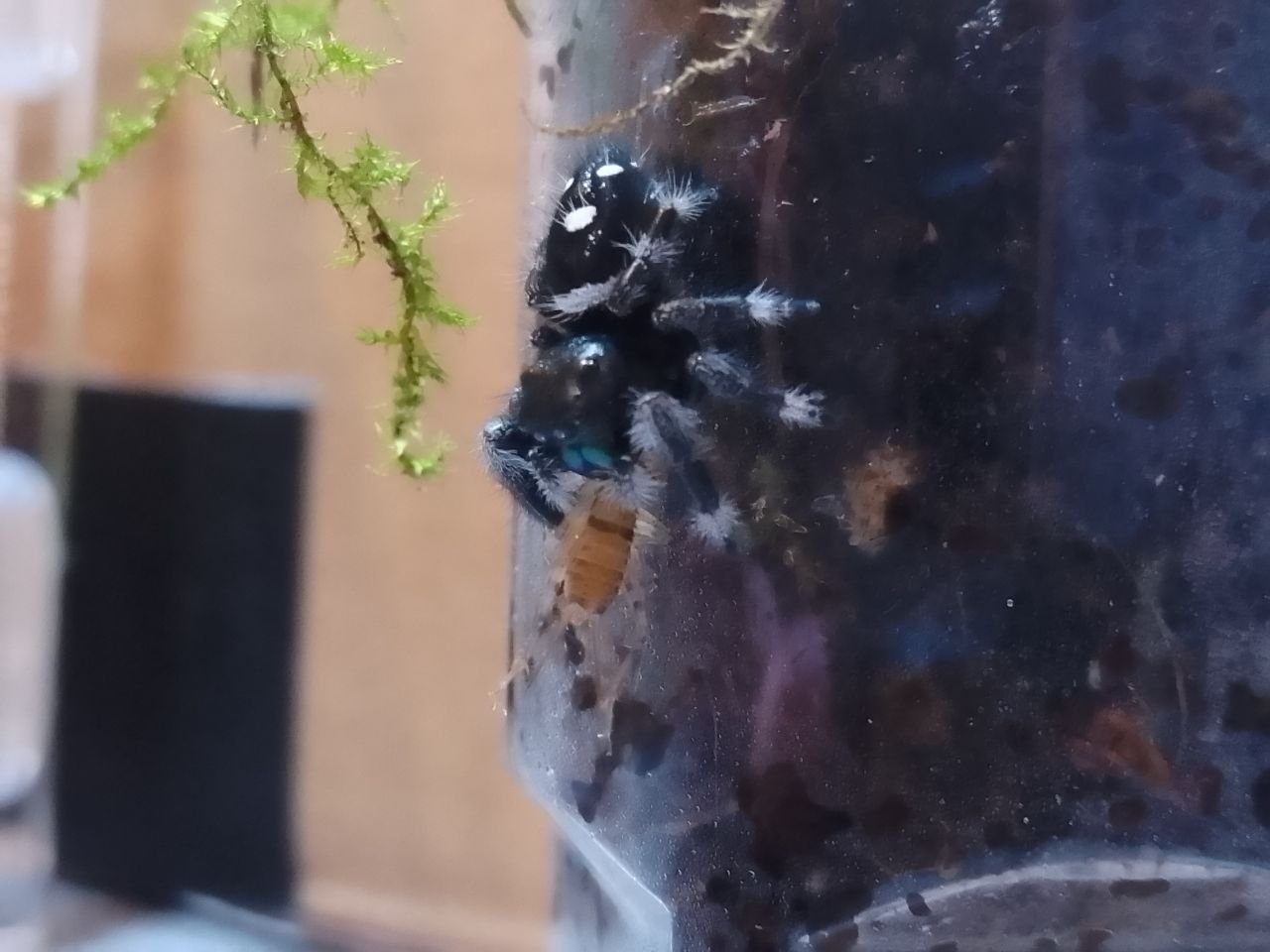
The Regal Jumping Spider, Phidippus regius, is a large and colourful jumping spider native to Florida, the Caribbean, and the Bahamas. This listing is the Floridalocality, prized for its bold coloration and curious, active temperament. This spider is currently at the i7 instar, a juvenile with a few moults left before maturity.
Specifications
Life stage: i7 instar (juvenile), captive bred
Adult size (for reference): females 15-20mm, males 10-13mm
Coloration: develops with each moult; adults range from black with iridescent blue-green chelicerae (males) to vibrant orange or peach (females)
Eyes: large and forward-facing, giving excellent depth perception
Care
Enclosure: vertical, at least 12×12×20cm, well ventilated
Substrate: coconut fiber, peat moss, or paper towel
Temperature: 24-28°C by day, dropping to around 21°C at night
Humidity: 50-70%, light misting every few days
Diet: bottleneck flies and size 3+ crickets at this stage, scaling up to larger prey as they grow
Full feeding schedule by instar, handling tips, and molting care: see our Care Guide.
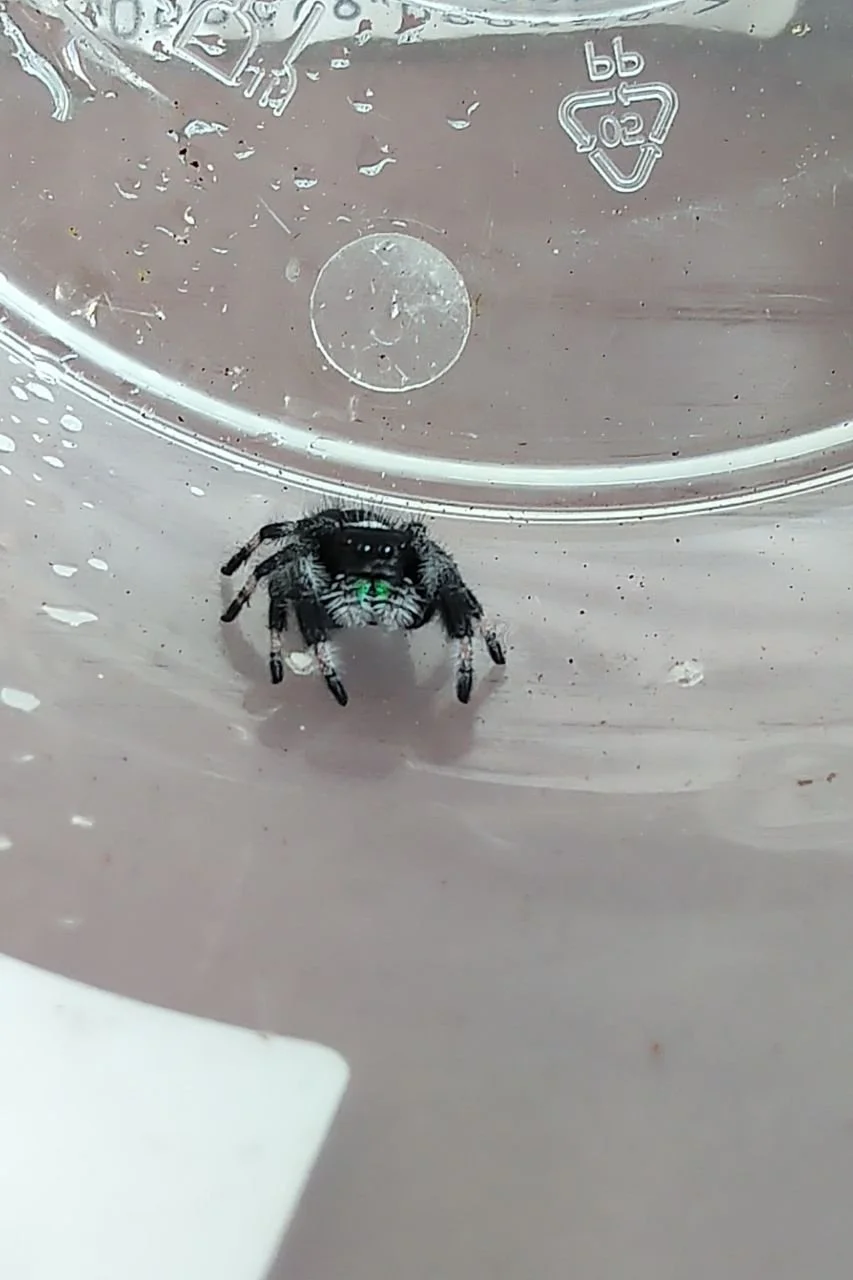
The Regal Jumping Spider, Phidippus regius, is a large and colourful jumping spider native to Florida, the Caribbean, and the Bahamas. This listing is the Floridalocality, prized for its bold coloration and curious, active temperament. This spider is currently at the i5 instar, a growing juvenile still several moults from maturity.
Specifications
Life stage: i5 instar (juvenile), captive bred
Adult size (for reference): females 15-20mm, males 10-13mm
Coloration: develops with each moult; adults range from black with iridescent blue-green chelicerae (males) to vibrant orange or peach (females)
Eyes: large and forward-facing, giving excellent depth perception
Care
Enclosure: 10×10×10cm or 10×10×15cm, well ventilated
Substrate: coconut fiber, peat moss, or paper towel
Temperature: 24-28°C by day, dropping to around 21°C at night
Humidity: 50-70%, light misting every few days
Diet: D. hydei fruit flies and size 1 crickets at this stage, scaling up to larger prey as they grow
Full feeding schedule by instar, handling tips, and molting care: see our Care Guide.
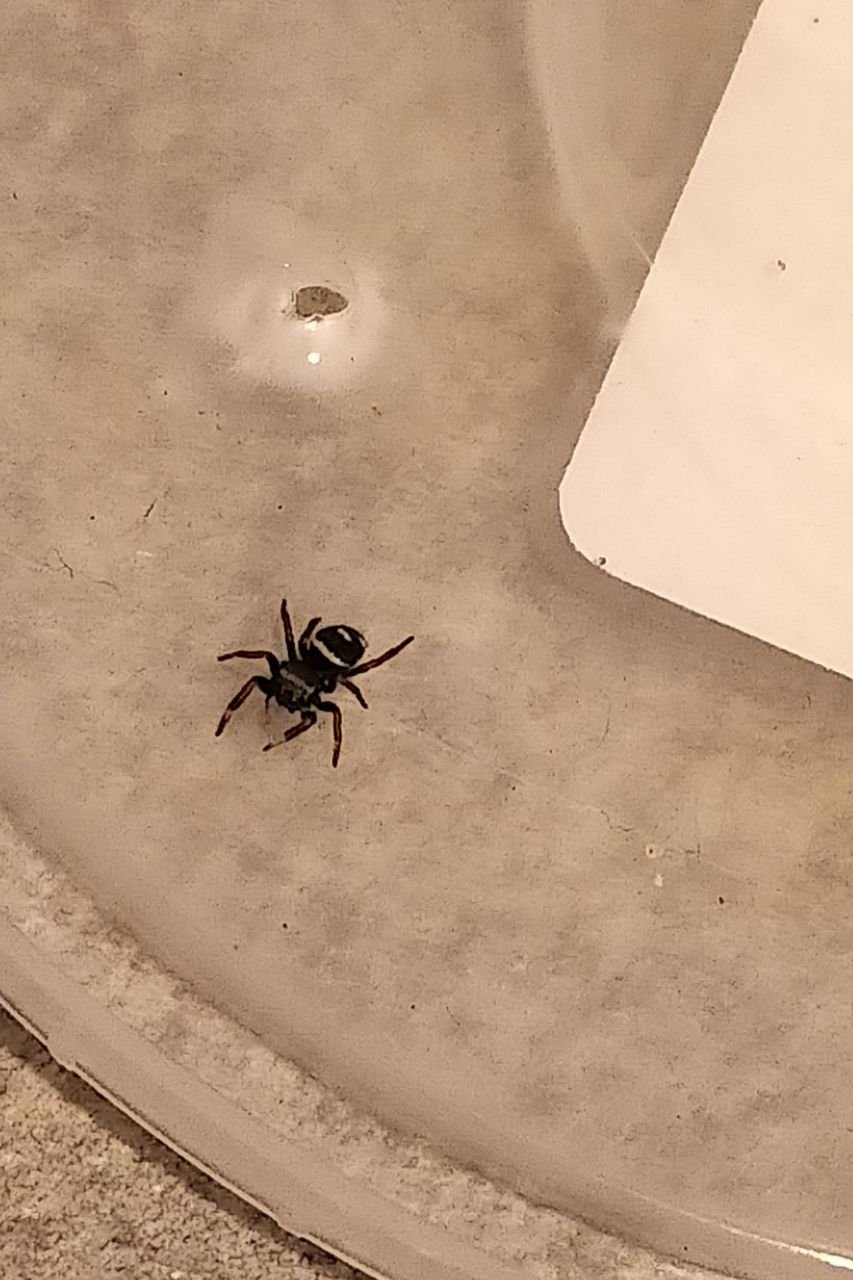
Phidippus regius “Bahamas” is a highly sought-after locality of the regal jumping spider, known for its striking appearance and generally calm, curious behavior. The females are especially notable for their bright coloration, often displaying varying amounts of white, cream, beige, or light gray after their final molt. Some individuals may also develop subtle pink or orange tones.
Males are considerably darker, typically featuring a black base color with contrasting white markings and characteristic iridescent chelicerae.
The “Bahamas” form is particularly popular in the terrarium hobby due to the potential for exceptionally pale females. However, coloration can vary considerably between individuals, and not every female will develop a predominantly white appearance.
This spider is currently at the i3 instar, a tiny spiderling not yet old enough to sex.
Specifications
Life stage: 3rd instar, unsexed, captive bred
Adult size (for reference): females 15-20mm, males 10-13mm
Coloration: develops with each moult; females often have a high proportion of white.
Eyes: large and forward-facing, giving excellent depth perception
Care
Enclosure: sling vial (included) or small 6×6×6cm breeding box; upgrade to 10×10×10cm around 5th instar
Substrate: coconut fiber, peat moss, or paper towel
Temperature: 24-28°C by day, dropping to around 21°C at night
Humidity: 50-70%, light misting every few days
Diet: D. hydei fruit flies at this stage, scaling up to larger prey as they grow
Full feeding schedule by instar, handling tips, and molting care: see our Care Guide.
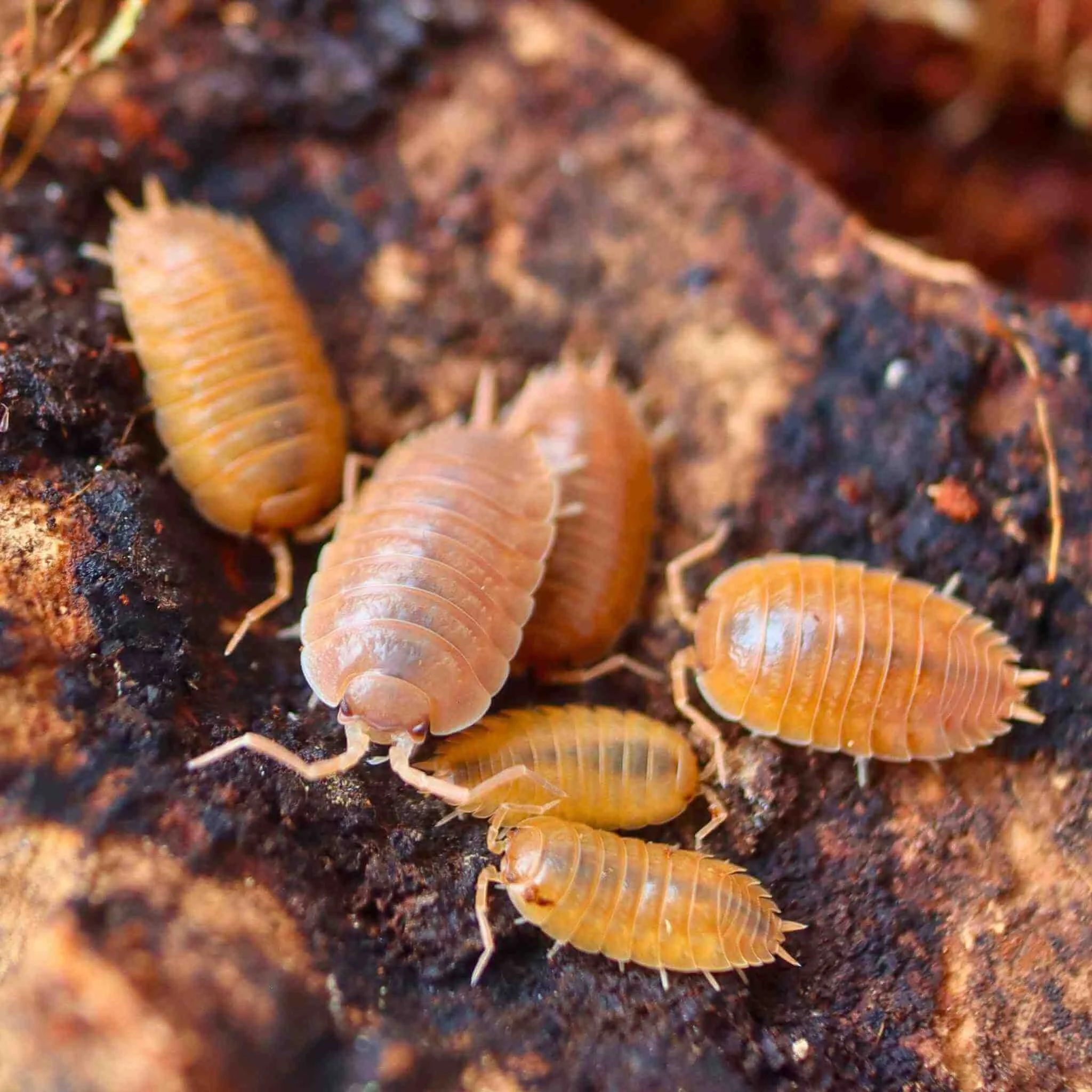
Porcellio laevis “Orange” is a cultivated colour morph of Porcellio laevis. It can grow up to 2.3 cm and has a development time of about 7-8 months. It is very eager to reproduce!
Porcellio laevis “Orange” has a flat, broad body. This colour morph is characterised by an orange ground colour. The antennae are also orange, whereas the legs have a white colouration.
The animals live in the litter layer of deciduous forests, which is why an attempt should also be made to recreate this habitat in the terrarium. The substrate is a mixture of leaves, soil, white rotten wood and lime. A layer of moss, pieces of bark and foliage should be placed on top of the substrate so that the animals can find shelters and the substrate does not dry out so quickly. The humidity in the tank should be around 50-70%, making sure that the substrate is always kept moist but not wet. Porcellio laevis “Orange” is a very robust isopod species and can be kept at higher humidities if waterlogging is avoided. The isopods are most active at temperatures between 18 and 26°C. Porcellio laevis “Orange” can generally often be observed as this isopod species is diurnal. With the right stocking density, you can always spot some if you look into the tank. Porcellio laevis “Orange” are an excellent addition to various tanks. For example, they can be kept together with snails, millipedes, phasmids, beetles etc. without hesitation. Many people also keep them in reptile tanks as a health policeman, as they eat food scraps and occasionally serve as food for the reptiles. Theoretically, the organic material contained in the substrate would be sufficient food for the isopods, as this is also the main food of the animals in nature. In the terrarium, however, they also like to eat vegetables, flowers, fruit and isopod food.
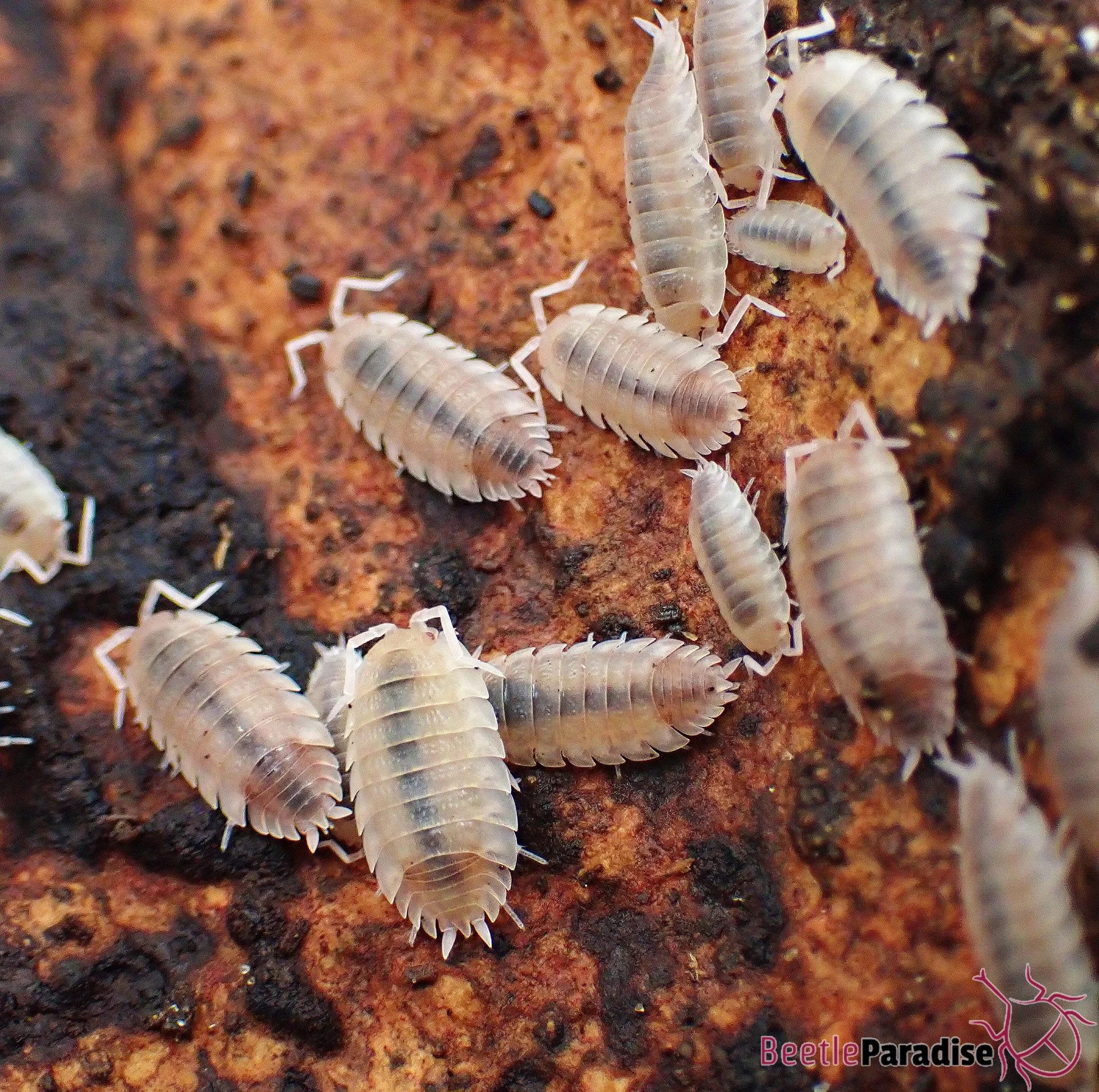
The Ghost Isopod, scientifically known as Porcellio scaber "Ghost," is a captivating and unique isopod species that has gained popularity among terrarium and vivarium enthusiasts. These isopods are known for their distinctive pale or translucent appearance, resembling tiny ghosts, making them a visually intriguing addition to bioactive setups.
Origin: Ghost Isopods are not a naturally occurring species in the wild but rather a selectively bred color morph of Porcellio scaber. They have been developed in captivity, primarily through breeding programs, to exhibit their characteristic translucent or pale coloration.
Temperature: Maintaining the ideal temperature is crucial for the well-being of Ghost Isopods. They thrive in a temperature range of 20°C to 24°C (68°F to 75°F). Keeping them within this temperature range allows for their activity and reproduction, contributing to their role in a bioactive enclosure.
Water Quality: Ghost Isopods do not have specific water quality requirements as they primarily reside on land and obtain moisture from their surroundings. However, it's essential to provide a damp substrate in their enclosure to ensure they have access to sufficient humidity. There are no specific pH or water hardness considerations for these isopods.
Enclosure Size: For keeping Ghost Isopods, the size of the enclosure depends on the number of isopods and the size of the habitat they are meant to enrich. In general, a small terrarium or container with dimensions of approximately 30cm x 30cm x 30cm (length x width x height) is suitable for a group of these isopods. The enclosure should include a suitable substrate, hiding places, and organic matter for them to feed on.
Feeding: Ghost Isopods are detritivores, which means they primarily feed on decaying organic matter, such as leaf litter, wood, and other plant material. They play a vital role in breaking down and recycling organic debris in their habitat. Additionally, they may consume fungal growth and microorganisms present in the substrate. Providing a variety of decomposing material in their enclosure ensures a balanced diet.
Lifespan: The lifespan of Ghost Isopods can vary, but they typically live for about 2 to 3 years under optimal conditions. Factors such as temperature, humidity, and food availability can influence their longevity. These isopods reproduce readily, and the presence of a stable population within their habitat contributes to their overall lifespan.
Behavior and Personality: Ghost Isopods are known for their social and communal behavior. They are often seen congregating in groups, especially in areas rich in organic matter. These isopods are harmless and contribute to the ecological balance of their environment by recycling nutrients and aiding in decomposition. They are also excellent indicators of the health of a bioactive enclosure.
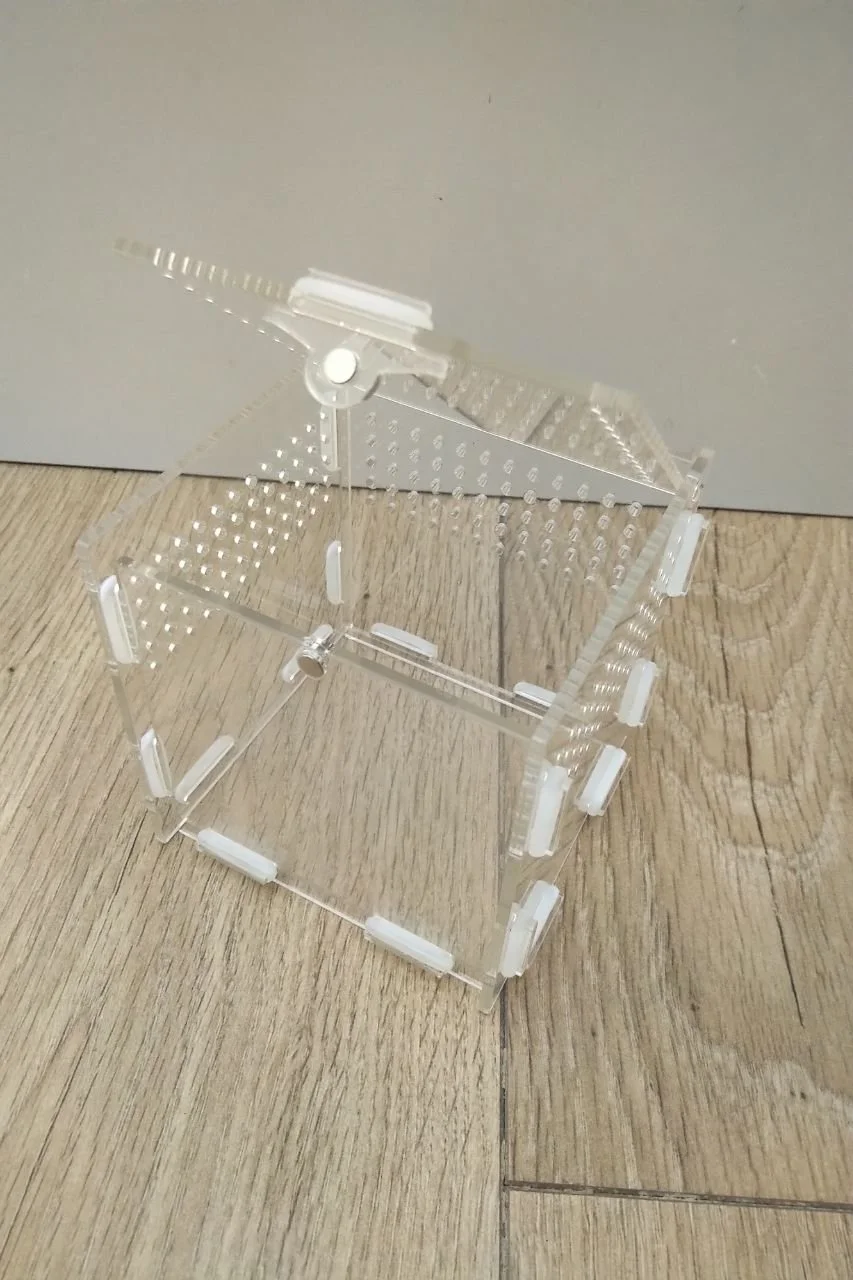
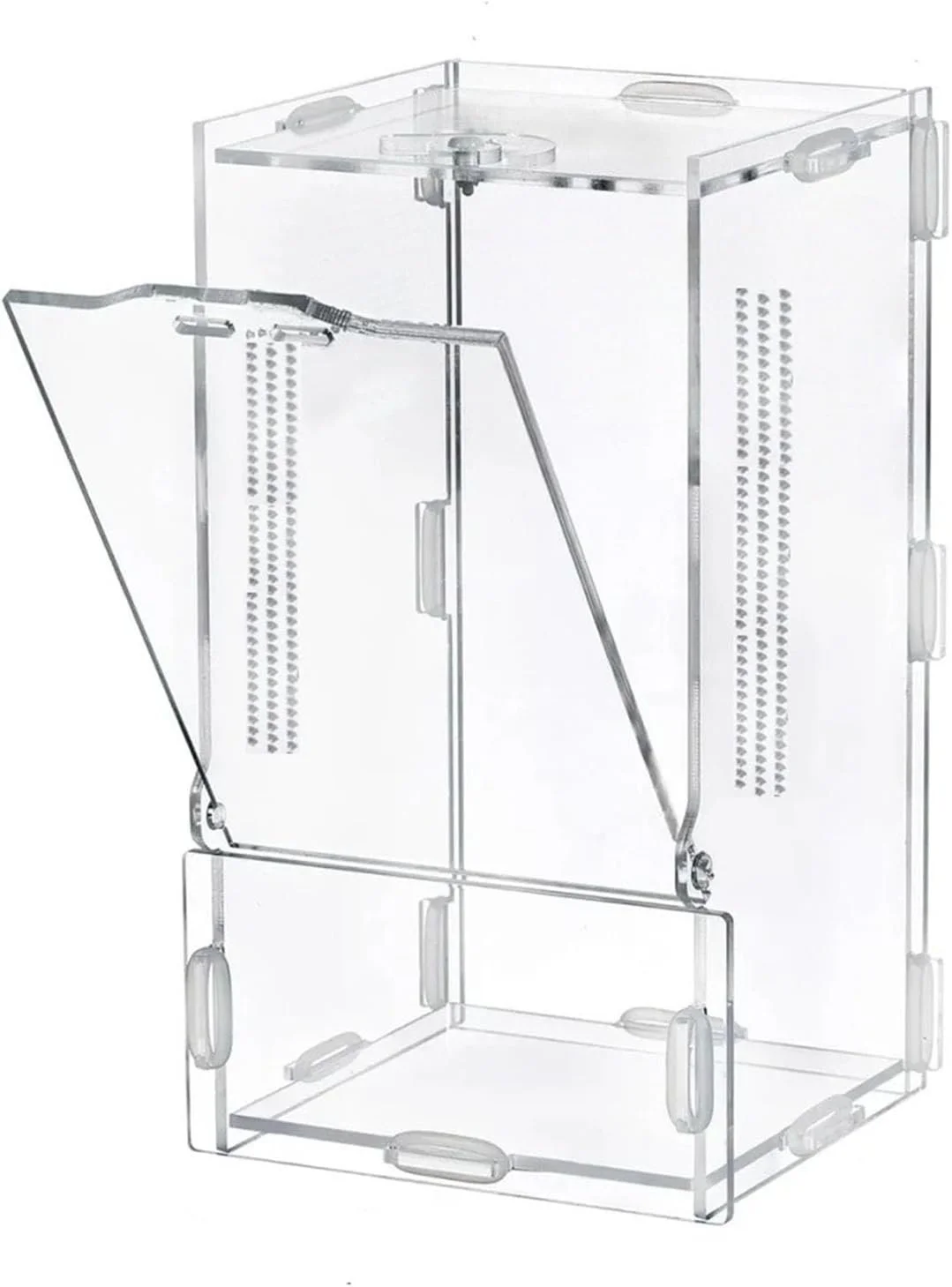
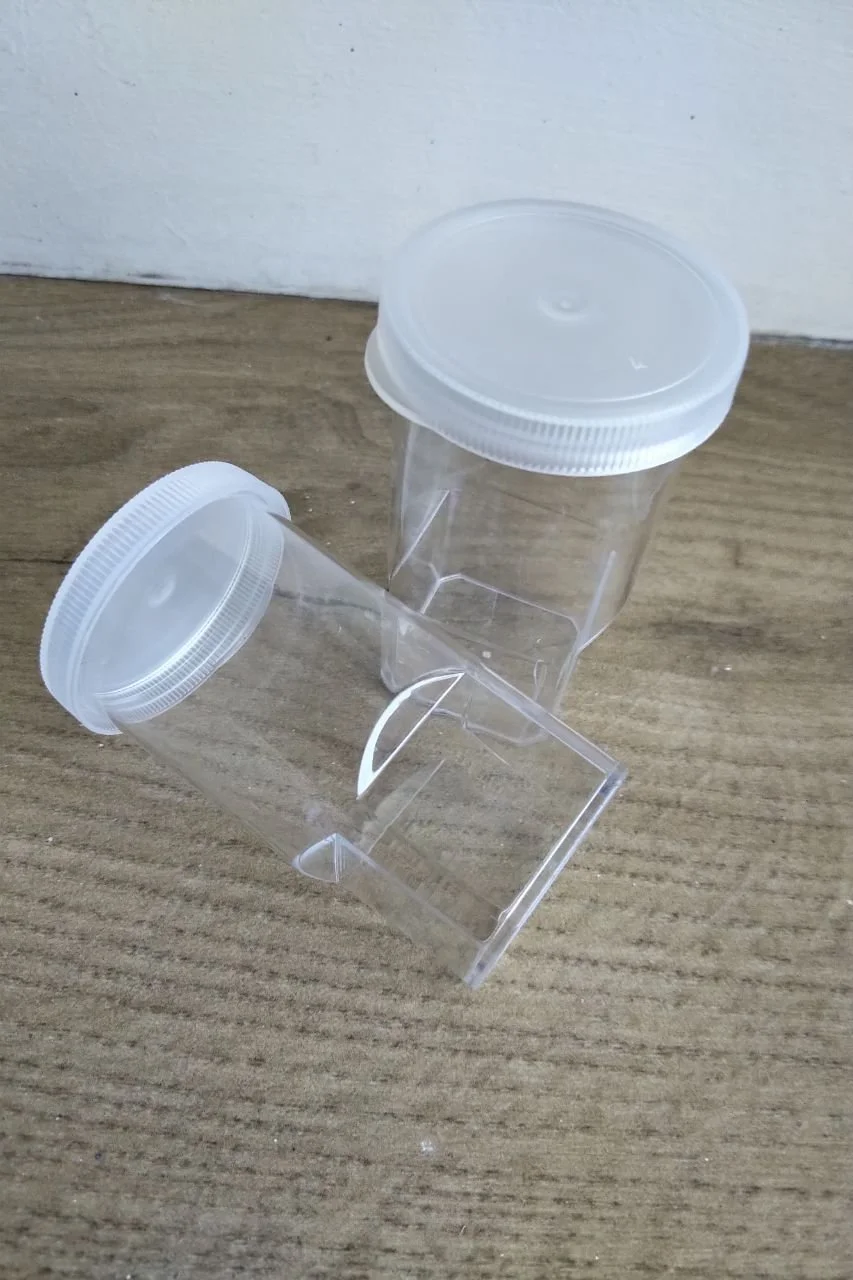
A small ventilated vial for rearing spiderlings and other tiny inverts. Perfect for housing slings that are too small for a full enclosure - easy to mist, easy to keep clean, and easy to check on without a rehouse. Once your spiderling has grown on a bit, move it up to one of our jumping spider enclosures.
Shop Categories
Jumping spiders
Isopods
Equipment
The Regal Jumping Spider, Phidippus regius, is a large and colourful jumping spider native to Florida, the Caribbean, and the Bahamas. This spider is currently a subadult, one or two moults from maturity, with its adult coloration already showing.
Specifications
Life stage: subadult, captive bred
Size: Females 15-20mm, males 10-13mm
Coloration: Males are black with iridescent blue-green chelicerae and white or orange leg bands; females range from black or grey with white spots to vibrant orange or peach, with iridescent chelicerae
Eyes: Large and forward-facing, giving excellent depth perception
Care
Enclosure: 12x12x20cm or larger
Substrate: Coconut fiber, peat moss, or paper towel
Temperature: 24-28°C by day, dropping to around 21°C at night
Humidity: 50-70%, light misting every few days
Diet: Fruit flies and pinhead crickets as a spiderling, scaling up to dubia roaches, crickets, mealworms, and waxworms as an adult
Full feeding schedule by instar, handling tips, and molting care: see our Care Guide.