
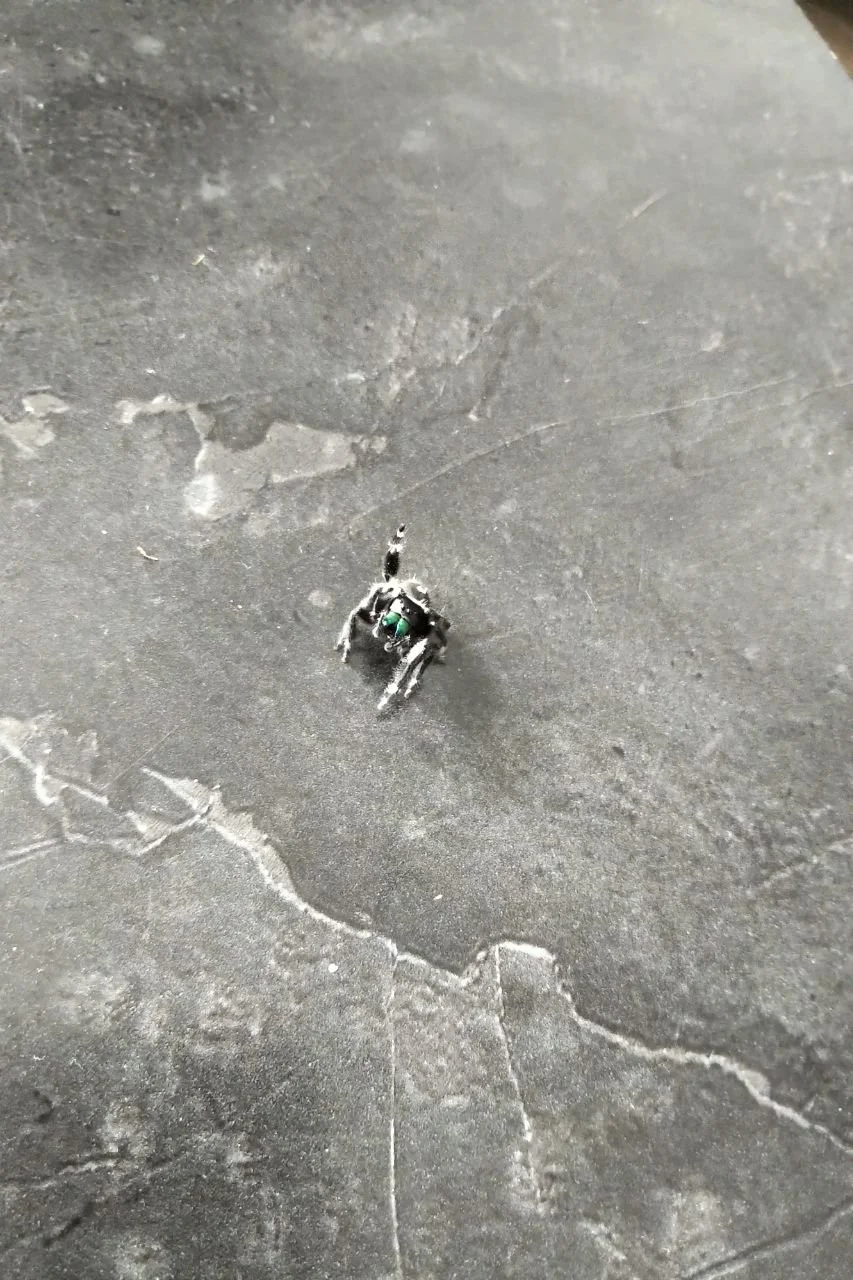
Jumping Spider Care Guide
Getting Started
Jumping spiders are hardy, low-maintenance, and genuinely rewarding to keep — but a little preparation before your spider arrives makes all the difference. This guide covers the essentials: housing, temperature and humidity, feeding, handling, and what to expect as your spider grows.
Housing
A small enclosure goes a long way — around 20×20×30cm with good ventilation suits most species, and taller setups give your spider room to climb and jump the way it would outdoors. Glass or plastic terrariums both work fine as long as the lid is secure and lets air through. Use a thin layer of coconut fiber, peat moss, or paper towel as substrate, and add branches, cork bark, or artificial plants for climbing and hiding — just steer clear of anything with sharp edges. Spot-clean out old prey and waste as you spot it, and swap the substrate fully every 4–6 weeks.
Temperature & Humidity
Most jumping spiders do best between 21–28°C during the day, with a slight drop at night — try not to let it dip below 15°C or climb past 29°C, since either extreme stresses them out. Humidity should sit around 50–70%; a small thermometer and hygrometer inside the enclosure makes it easy to keep track of both. Good airflow matters just as much as the numbers — stale, damp air invites mould, so don’t skimp on ventilation.
Water
Jumping spiders get most of the moisture they need from their prey, so you don’t need a water dish. A light misting once or twice a week gives them the odd droplet to drink and tops up humidity at the same time — just let things dry out a bit in between so the enclosure doesn’t stay damp.
Feeding
Offer prey roughly the same size as your spider, or a touch smaller — anything bigger risks stressing or injuring it. Juveniles are hungrier and do well fed every 1–2 days, while adults are happy with a meal every 2–3 days. Watch the abdomen as your guide: shrunken means hungry, plump means it’s had enough. Clear out anything uneaten after about 24 hours so it doesn’t linger and stress your spider.
Suitable prey scales with age: spiderlings (springtails, small fruit flies), juveniles (fruit flies, extra-small crickets), sub-adults (small mealworms, small crickets), adults (dubia roaches, bottle flies, crickets, mealworms, waxworms).
Handling
Jumping spiders can be handled, but sparingly — they’re easily stressed by frequent contact. Move slowly and calmly, and rather than picking one up with your fingers, coax it onto a soft brush or into a small container to move it around. Keep sessions short and stay low over a surface, since they may jump unexpectedly and a fall can hurt them. If your spider starts moving its legs quickly or tries to retreat, that’s your cue to stop and leave it be.
Molting
Before a molt, your spider will usually slow down, stop eating, and may look a bit duller or spin a small silk retreat to hide in — all normal. The process itself can take anywhere from a few hours to a full day, so avoid handling or disturbing your spider during this time, and keep humidity on the higher side to help the old exoskeleton loosen. Once it’s out, the new exoskeleton is soft and vulnerable — wait a day or two before offering food again.
Health & Warning Signs
Jumping spiders are hardy, but a few things are worth watching for. A shrivelled abdomen and general sluggishness usually point to dehydration — raise the humidity and mist a touch more often. Mites or other tiny pests can hitch a ride in on substrate or feeder insects, so it’s worth quarantining new prey and keeping the enclosure clean. Too much moisture and poor airflow can lead to mould or fungal growth, and a difficult molt is one of the more serious risks — keep humidity steady and never handle a spider mid-molt. Falls and rough handling are the main cause of lost or damaged legs, which is one more reason to keep handling brief and close to the ground.
Lifespan
Most jumping spiders live 1–2 years, with females often outliving males. Lifespan varies by species and care conditions.
General Care Tips
A few habits go a long way: check in on your spider daily, keep them housed one to an enclosure since they’re territorial, and shuffle the decor around occasionally to keep things interesting. Different species can have slightly different needs, so it’s worth a bit of extra reading if you’re branching out beyond your first spider.