
 Image 1 of 2
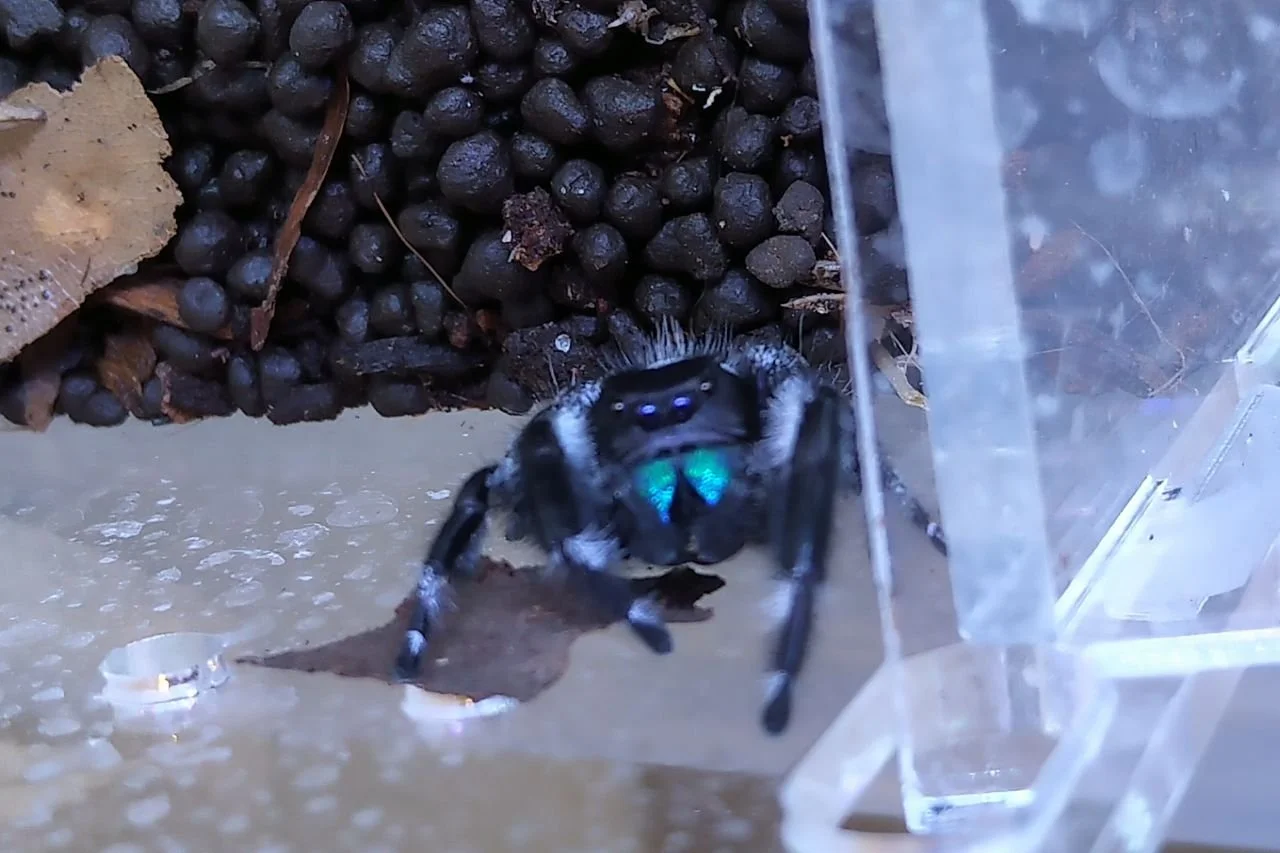 Image 2 of 2
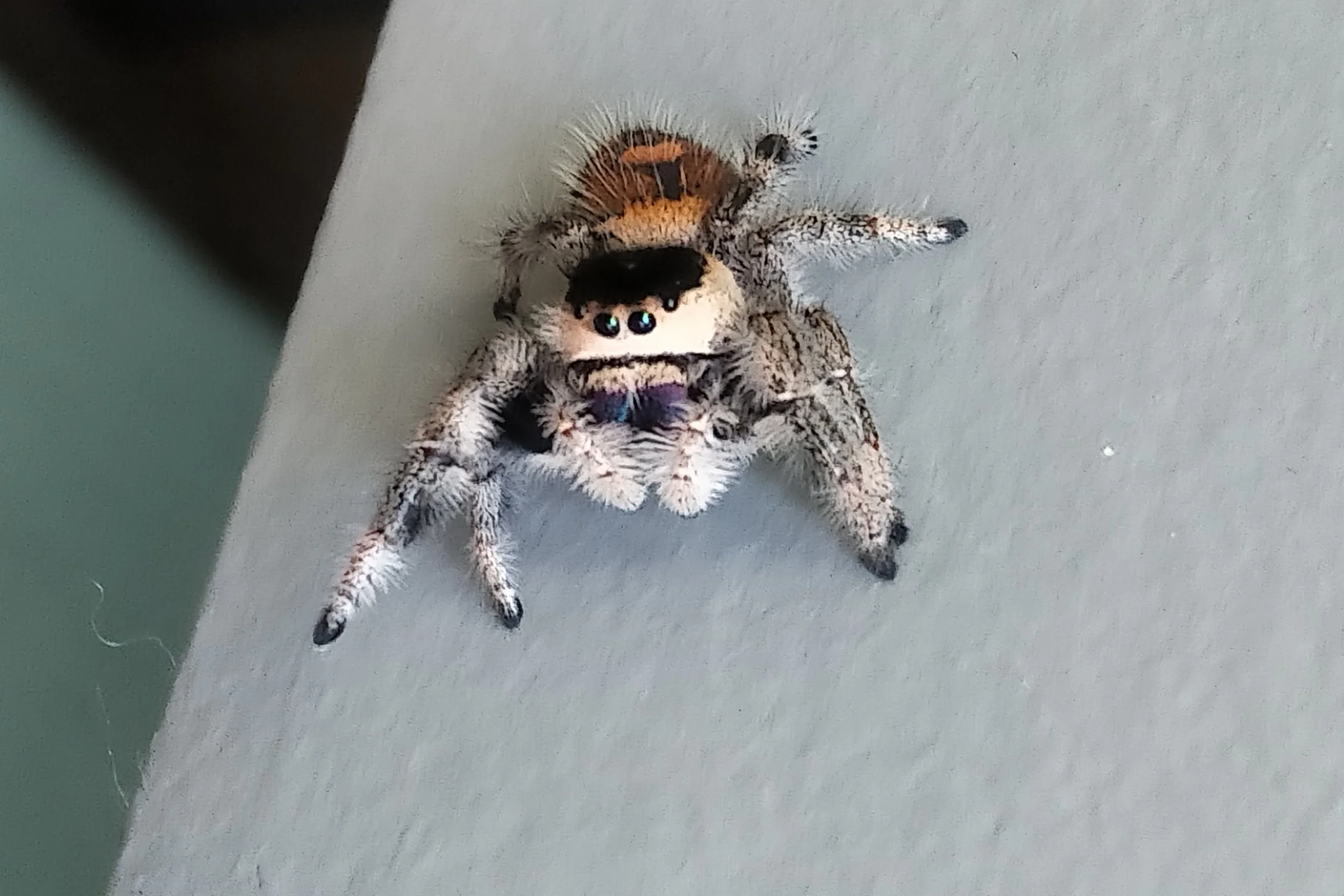
The Regal Jumping Spider, Phidippus regius, is a large and colourful jumping spider native to Florida, the Caribbean, and the Bahamas. This listing is the Bahamas locality, prized for its bold coloration and curious, active temperament. This spider is currently a subadult, one or two moults from maturity, with its adult coloration already showing.
Size: Females 15-20mm, males 10-13mm
Coloration: Males are black with iridescent blue-green chelicerae and white or orange leg bands; females range from black or grey with white spots to vibrant orange or peach, with iridescent chelicerae
Eyes: Large and forward-facing, giving excellent depth perception
Enclosure: 12x12x20cm or larger
Substrate: Coconut fiber, peat moss, or paper towel
Temperature: 24-28°C by day, dropping to around 21°C at night
Humidity: 50-70%, light misting every few days
Diet: Fruit flies and pinhead crickets as a spiderling, scaling up to dubia roaches, crickets, mealworms, and waxworms as an adult
Full feeding schedule by instar, handling tips, and molting care: see our Care Guide.
The Regal Jumping Spider, Phidippus regius, is a large and colourful jumping spider native to Florida, the Caribbean, and the Bahamas. This listing is the Bahamas locality, prized for its bold coloration and curious, active temperament. This spider is currently a subadult, one or two moults from maturity, with its adult coloration already showing.
Size: Females 15-20mm, males 10-13mm
Coloration: Males are black with iridescent blue-green chelicerae and white or orange leg bands; females range from black or grey with white spots to vibrant orange or peach, with iridescent chelicerae
Eyes: Large and forward-facing, giving excellent depth perception
Enclosure: 12x12x20cm or larger
Substrate: Coconut fiber, peat moss, or paper towel
Temperature: 24-28°C by day, dropping to around 21°C at night
Humidity: 50-70%, light misting every few days
Diet: Fruit flies and pinhead crickets as a spiderling, scaling up to dubia roaches, crickets, mealworms, and waxworms as an adult
Full feeding schedule by instar, handling tips, and molting care: see our Care Guide.